SOME TIPS ON HOW TO PICK THE COZUMEL DIVE SHOP THAT IS PERFECT FOR YOU!

Traveling to Cozumel many times with different groups of divers at a variety of skill levels, friends, family, alone and with clients, I soon realized that not every dive operation and resort is right for every diver. When I got heavy into photography, choosing the right dive operator became even more important. Over the 30 years I've been traveling to Cozumel there have typically hundreds of active dive shops that come and go. A handful of bigger ones, and tons of individuals that rent a six-pack fiberglass hull and a motor and start up another dive shop.

Choosing the correct Cozumel dive operator for your trip is pretty simple if you keep YOUR own priorities in mind. What's important to you, might be insignificant or even offensive to someone else. There are many things that differentiate dive operators. Here are several thing you might want to consider:

- how long they have been in business (options range from a couple of weeks to 40+ years).

- how many boats they have. This could be important if they have boat problems. Having a backup insures you'll be diving.

- how big their boats are and how many passengers they put on each boat. Fast boat vs cattle boat

- most big boats carry more divers, but many are equipped to do so. They typically divide the divers up into two or three smaller groups and take them to different areas of the reef. Watch out for the dive operators who pack thirty divers onto a boat and dump them all in the same spot.

- how experienced and reliable their boat captain and crew are. Some of the boat captains there have been picking divers up for over 40 years. That's experience! 

- how experienced the Divemasters are. Was he out partying the night before?

- how enthusiastic the Divemaster is about showing you a good dive. Some dive guides just float alongside the group and don't make any effort to find and point out critters. A good Divemaster will take an active interest in the dive and will point out things you would not have found on your own. On the other hand, too much tank-banging by the DM will make you crazy!

- how well-maintained the boats are.

- do the boats have heads? Not everybody pees in their wetsuit and heaven forbid, if those beans you ate last night start acting up and your closest option is overboard!

- does the boat have a safe and secure place to keep your camera at all times?

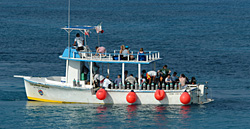
Fast Boat vs Slow Boat


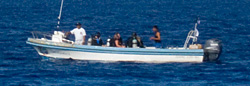
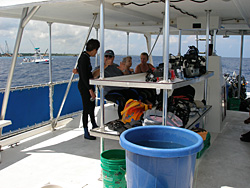
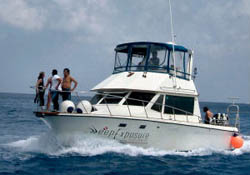
SMALL CATTLE BOAT


FAST BOAT, BUT NO SHADE, NO HEAD,
NO PROTECTION FROM WIND OR SEA


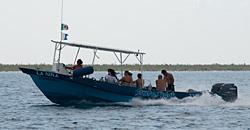
SUN SHADE, BUT NO PROTECTION FROM
WIND, RAIN AND SPLASH


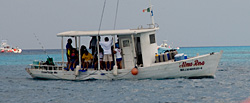
YIKES!

You'll see a lot of chatter online about fast boats vs slow boats. This is another area of confusion, manipulation and inaccuracies because the crappy little dive shops with junk boats really push the "fast boat vs cattle boat" story. Most new divers don't know what the difference is and how it affects them. There are many kinds of boats and the speed plays only a small part in the kind of boat you'll end up diving on. Big boats can go fast, small boats can go slow. The term "fast boat" is used loosely in Cozumel and generally means a small boat, under the 39' size required to be a "big boat".

The size of the boat is important. If the port closes due to the threat of an incoming storm. Many times the Harbor Master will close the ports to small boats, but let only the big boats go diving. If you want to reduce the risk of having your dive day cancelled, go with a dive operator that has a big boat. In most cases, when the port opens its to the big boats first, then small boats later.

There are also many small dive ops that pack 8 divers on a small boat, leaving little room to move around. They are typically the ones that call the big boats "cattle boats", when in fact you might have more room per person with 10 divers on a big boat.

Being on a fast boat doesn't mean you're going to get a comfortable ride. In some cases these boats do not have shade from the sun, do not have a head, and definitely do not have a safe place to keep your camera.

The advantage of being on a fast boat is that you'll get to the reefs 15 minutes sooner than the bigger boats, but in some cases this is pretty insignificant and a hefty price to pay if you are a bit more into comfort, than speed.

Another thing to consider is if the weather kicks up while you're diving, the boat captains on the big boats have a much better vantage point for picking up divers because they are much higher out of the water. They are more likely to see divers that have surfaced and can pick them up more quickly and safely.

This doesn't mean that ALL fast boats are uncomfortable. The Belinda (Chili Charters) and Mestizo (Mestizo Divers) are two of the most comfortable fast boats I've ever been on. They both have protected areas to get out of the sun and wind, have a head, have a secure area to store your camera, and have rinse tanks.

What's Not Important

A pretty store. Whether or not they sell dive gear doesn't have anything to do with YOUR dive trip. You can buy dive gear anywhere and doing it in Cozumel is the absolute most expensive way, due to the import taxes these dive shops must pay to get the gear there. There are many dive operators that have no store at all. This is not a big deal and not having a store does not mean that they are not a good dive operation.

Looking For Referrals?

Scuba message boards and forums are loaded with plenty of individuals who know everything there is to know about Cozumel (including me ;-p). Take what you read on these boards with a grain of salt. Most the message boards do not require that the person behind the online name show their real identity. Its possible that "missy", "big joe diver", "divemommy", and "singlediver" are all the same person who will login under different names and correspond with themselves, making it look like there are a whole bunch of experienced people who just LOVE the ABC Dive Shop. Since the message boards pride themselves on how many members they have, as opposed to the quality of their information, they do not discourage this practice*. You might find this prevalent on boards that sell a lot of banner ads. So if you've got five people who jump in to recommend a particular dive shop before you tell them what your needs are, proceed with caution. What's right for someone else may not be right for you. You wouldn't let your 14-year old daughter take advice from a total stranger online, why would YOU do it when asking about a life-support sport like scuba diving? Some of the boards are not well-moderated and are overrun by dive operators and their friends trying to recruit business.

The best way to get advice on which dive shop to choose is to talk to your experienced diving friends, people you've met face-to-face who have been there. Even better if you have dived with this person, so you know where they rank. I personally have read trip reports sent to Undercurrent that were written by people from dive trips I've been on, and scratch my head wondering where they were coming from. At the same time they are looking at my pictures saying "we didn't see any of that".

You can talk to your local dive shop. Many of them have taken groups to Cozumel. If they have experience with many different operators they'll be a good source of first-hand knowledge.

Travel agents can be a good source of info too, but remember that they will likely send you to the operator that pays the highest commission, not always the best dive operator. At the end of this article is a list of travel agents that I have had first hand experience with and know they st ear you in the right direction. With your list of priorities in hand, ask them tough questions to find out if the dive shop they liked or disliked will work for your needs. Make sure you talk to people like yourself, that have had similar needs and requirements.

*Wetpixel.com is an exception. They do not allow multiple identities and will suspend an account in the event a member gets abusive. The information here is generally of very high quality and commercial posts are ONLY allowed in certain threads designed for that.

Never dive with a Cozumel dive operator that:

  • Does not carry O2 onboard. Ask the DM or crew if you can see it and ask him when was the last time he used it. The point is, you want to make sure the canister is full and operational in the event YOU need it.
  • Does not ask for your C-card. You don't want to be on the same boat as others who are not certified or who hasn't dived in 10 years.
  • Does not have fresh water onboard.
  • Does not hand you the Marine Park bracelet. Some dive operators don't hand them out to guests, so you pay them, but they never pay the Marine Park.
  • Does not have a marine radio.
  • Has a DM or captain with alcohol on his or her breath, even if it is from the night before.

Location, Location, Location

Location of the dive shop will undoubtedly play a part in your decision. If you're staying at a resort, most have on-site dive shops, but do also allow other dive operators to pick up at their piers. There are some exceptions, but in most cases it because that particular resort has its own dive shop on site. An example of this is Scuba Club Cozumel, a dedicated dive resort and the dive shop owned and operated by the same people. It makes sense for them to only offer diving with their dive shop. The dive shop at Scuba Club is one of the best on the island, so this should not be a deterrent. They also have their own private pier, which means you won't be trampled on by groups from 15 different dive shops.

If you're staying at a hotel in town, you'll probably dive with one of the many dive shops in town. Most of them pick up divers at several piers downtown so things can get crowded when all the boats are loading up in the morning. Best to choose a dive shop that is flexible on their departure time so you don't have to be tripping over a hundred other divers as you're trying to board the boats. An exception to this is Aqua Safari, who has their own pier right in front of the dive shop, so all you have to do is walk across the street and you're onboard. They too are a fine dive operation and can boast being one of the first dive operators in Cozumel.


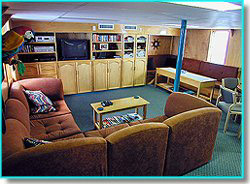
SCUBA CLUB COZUMEL REEF CAT
BIG BOATS OFFER MORE SPACE FOR
DIVERS, BIG CAMERA TABLES, AND
BIG RINSE TANKS

Cozumel for the Underwater Photographer

Photographers carrying large housed cameras and video cameras need to be especially careful about who they choose to dive with. We have spent a lot of money on our gear and protect it with our lives, so its nice to find a dive operator who has Divemasters and boat crew that understand and have experience with handling expensive camera gear.

Avoid the small dive shops with six-pack boats. These boats don't have a safe place to keep the cameras while your in transit to the reefs. Storing cameras under your seat or in the bow of the boat is the worst place you could put it. The constant beating of the bow will quickly knock the life out of your expensive gear and you won't be taking any pictures at all. Most these boats don't have fresh water rinse tanks at all. If they do, its usually a 5-gallon bucket which is not large enough to dip a housed SLR with a dome port and two strobes. If your camera does fit into a bucket, DO NOT leave it in the bucket while you are in transit, because you will very likely end up with a flood. The o-rings in your camera housing are not compressed at the surface and this is the most likely place a flood will occur. If you do end up on a six-pack boat with that many divers you are also at risk that someone will drop a weight belt or tank on your camera, so the best place would be to hold the camera and housing on your lap during the entire trip to and from the reefs. Better to avoid these small boat completely.

What if you come in on a cruise ship?

This is where I don't have any experience. I'm the last person you will ever find on a Caribbean cruise ship, so I am not aware of their schedules, or how much time it takes to move thousands of people on and off a ship. Your best bet is to check with the cruise lines on what they recommend. 

Bonnie's Recommendations

Many friends ask me for recommendations, so here are my favorites, and the reasons why..

Favorite Dive Operators - I've dived with 16 different dive ops in Cozumel, but would not recommend some of them because the experience wasn't always something I would want for my friends. Hung-over DMs, crappy boats, no O2 on board, horrible organization, sleeping boat captain, inattentive DMs when divers were at the surface, no dive briefings, DMs who get out of the water before the guests do, etc.

Scuba-Cozumel - This is the in-house dive operator at Scuba Club Cozumel. They have a fleet of seven dive boats of all different sizes and speeds. The staff is efficient and friendly and these guys know how to handle cameras! The bigger boats have beautiful multi-level camera tables and large rinse tanks dedicated for cameras. If you prefer a smaller group you can get one of the smaller boats for a group of four to eight divers. The bigger boats have multiple levels with many places you can gather with friends, or find a quiet place to get away from that annoying diver from New Joisey. They offer protection from the sun, wind, rain, splash and have a nice top deck where you can get lots of sun if you want it. Although the boats can handle large groups, they divide up the divers into groups of eight and are dropped off in different area from each other. Nice heads, experienced captain and crew, inpecably maintained! Click here for more info about the Scuba Cozumel boats

Mestizo Divers (sadly, Freddy has retired) - Freddy Contreras was one of the first people I met in Cozumel and I consider myself a very lucky person. He was a freelance scuba instructor who worked for Aqua Safari. I have done my Advanced Open Water with Freddy and later did my Divemaster certification. I've always believed that Freddy is the best dive instructor I have ever met in 22+ years of diving. Now he has started his own dive operation. He's got one of the nicest small boats in Cozumel (a 27' Baha with a GM 7.4 L, 320HP inboard engine). Its new, clean and is immaculately maintained. His boat captain is Enrigue, who has a lifetime of experience in Cozumel. He grew up there. He caters to small groups of no more than six divers.


DEEP EXPOSURE DIVE CENTER BOAT

Deep Exposure Dive Center - They have a beautiful 39' Conquest dive boat and offer a higher level of quality service to their divers. All dive trips include large, fluffy towels, "hands free" gear service, healthy food and drinks, aluminum or steel tanks, private fresh water shower, clean head and sink, gear rinse tanks, camera rinse tanks, camera table, and both sun-bathing and shaded areas.

Aldora Divers - I've recently added them, since I've done some blackwater dives with them and found the operator, boat, and staff to be courteous and professional.

Contact us with your comments on this article

Recent Comments:

"I VERY MUCH appreciate your insight on this and the extra help you provided in your email. I asked a question on Scuba Board about who to dive with and nearly got trashed first, then spammed to death to dive with their 'BEST ON THE ISLAND' dive opp. So bad I decided not to dive with who they all recommended. Ended up diving with Freddy at Mestizo Divers and it was perfect for me and my family."

"Thanks for the great advise. I'm in Cozumel now. Been diving with #### Diving but hated the small, crappy boat. We moved over to Aqua Safari and loved the diving experience. The big boats are kind of old with more divers but we got on Belinda and will come back here again."

"You've done a very excellent job of addressing a big issues for unsuspecting divers who don't have much experience in Cozumel. Nobody else has broken it down quite like this. I and my family appreciate your viewpoint."
 

TRUK ODYSSEYDiving in Truk Lagoon Aboard the Odyssey

Photos and text by Bonnie Pelnar

Divers who plan a trip to Truk are usually going there for one thing... the most exceptional wreck diving in the world. Here you'll find a fascinating history, healthy marine life and the world's largest concentration of divable wrecks packed into one lagoon. What makes diving there even more desirable is the usually calm surface conditions, year-round warm water temperatures, 50’ - 100’ visibility, and lack of strong currents.

Chuuk State lies in the center of Micronesia, about 617 miles southeast of Guam and 3,262 miles southwest of Hawaii. Truk Lagoon consists of seven major island groups in a triangular-shaped atoll some 40 miles across. Most of these islands are undeveloped and inhabited by locals. Only the capital island of Weno, where the airport is located, has any accommodation for tourists. The outer reef of Chuuk Atoll is dotted by tropical islets, made up of nothing more than a white sandy beach and a couple of palm trees surrounded by crystal blue ocean and healthy coral reefs.

FUJIKAWA MARUTRUK LAGOON PHOTO GALLERY

Historically speaking, this area is more often referred to as Truk Lagoon, famous for the battle that played out here during WW II. Truk was a military base for the Japanese Combined Fleet consisting of mighty battleships, destroyers, submarine tenders, military supply and support vessels, and aircraft. In February of 1944 the U.S. launched a massive air attack on Truk Lagoon, code-named "Operation Hailstone". This two-day battle brought 48 ships and hundreds of aircraft to the sandy bottom, where they've sat silently for over a half a century. The success of this attack crippled the Japanese combat ability and some historians credit the victory at Chuuk as the turning point of the Pacific War.

The novice-historian will benefit from doing a bit of reading before their trip to better understand the significance of what will be seen there. There is a wide range of different types of vessels. Understanding its purpose makes diving each wreck all the more memorable and gives one an idea of what the Japanese were doing there before the attack. The Japanese had everything they needed there to conduct a war effort. An excellent and accurate resource for this information is the book WW II WRECKS OF THE TRUK LAGOON by Dan Bailey.

Diving in Truk

TRUK ODYSSEYDiving in Truk didn't become popular until the early 1970's when the first dive operator opened its doors. Most of the wrecks are intact offering a glimpse into the history of what actually went down on that fateful day. Today Truk is high on the wish list of divers of all skill levels.
The battle-scarred remnants of this once mighty fleet is the world's largest artificial reef and living memorial, holding the very best of the undersea world and maritime history at one destination. Over 300 varieties of hard and soft corals have attached themselves to these structures and are more healthy and abundant than coral I’ve seen on many of the natural coral reefs other dive destinations boast about.

Because many of the wrecks sit in several hundred feet of water, Truk diving is assumed by many to be deep and dangerous. Considering the massive size of these ship’s hulls and 100’ masts, some piercing the surface, there is plenty of wreck to dive from the deck up. So those divers who don't want to dive deep can enjoy the life that grows on the top half of the wreck. In the event you choose decompression diving, there are 30' and 20' marked stops on many the wrecks.

Although 57 years of ocean exposure has weakened the structural integrity of the ghost fleet, the wrecks are relatively intact and many artifacts lie in place as they did the day the vessels went down. Tanks, trucks, machine gun nests, telegraphs, artillery canons, and torpedo launchers scatter the decks, all decorated with a layer of colorful marine life.

The massive cargo holds of some of these carriers still contain the tanks, airplane engines, tractors and trucks they carried when they went down, now covered with encrusting sponges that glow bright yellow-orange at the pass of a torch or the flash of a photographer's strobe.

Mixed in with the Japanese saki bottles, china plates, lanterns, and piles of ammunition is a kaleidoscope of colorful soft coral, sponges, and leather coral garnished with whip and fan coral. Carpet anemones wrap themselves around the masts and davits, giving home to clownfish, shrimp and damselfish. Huge branches of pink, purple and orange soft corals, and bright orange mollusks adorn the kingposts resembling a floral decoration one might see at a wedding ceremony.

The government of Micronesia has declared Truk Lagoon a national monument and it is protected by law so naturally taking artifacts is strictly prohibited. Unfortunately some artifacts have been taken by local treasure hunters mostly looking for gun powder, but many interesting artifacts remain with a wide range of munitions and WW II armaments, war supplies, and yet to be discovered.

The Odyssey: The only way to see Truk Lagoon

With so much water and so little land, the best way to see Truk Lagoon is by boat. I chose Truk's newest live-aboard the 132' Odyssey. Odyssey was originally built in 1978 for a cruise company in Fiji to accommodate 44 passengers. Refit in 1999, she now carries only 12-16 divers and 6-8 crew.

TRUK ODYSSEYTRUK ODYSSEY

Although Odyssey is new to Truk, the captain and crew have years of diving experience here. Captain Lenny Kolczynski has worked on liveaboards around the world spending three years in Truk Lagoon as Captain of the Aggressor. The crew and dive guides all come from the local dive shops. They grew up on these wrecks and are ready and willing to take you to the most photogenic spots on each of them.

TRUK ODYSSEYWherever you go on Odyssey, you’ll find plenty of room to spread out. Odyssey's eight staterooms are much larger than those on most live-aboards with private bath and shower, and plenty of storage space. During the refit, the original cabins were doubled in size. There are two private single staterooms for the diver who prefers total privacy.
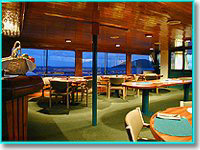
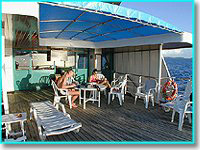
The indoor dining area on the Saloon Deck is where meals and snacks are served. It’s also a comfortable place to get out of the afternoon sun and plug in your laptop. Directly out the back is a large sundeck, the perfect place to get rid of that wetsuit tan line or enjoy the sunset.

Downstairs on the A Deck is the entertainment lounge where everyone gathers after dinner to watch movies, play cards and board games and show off what they've captured on slides and video.

The spacious dive area is designed for the ultimate convenience of the diver with a large multi-layered camera table on one end, and large secure storage bins directly at the foot of the tanks. Wet suits are hung out of the way but conveniently in the path of the warm air coming from the engine room. A couple of steps down to the back dive deck and you begin to see the ripple distorted silhouette of the massive warship beneath that is just one giant stride away.

Odyssey's dive plan is done like no other live-aboard I've been on. No bells telling us to get geared up, no skiff rides to the dive sites, and no crowds! Since most the dive sites in Truk are moored, Odyssey picks up the mooring and stays at that wreck for several hours. After a detailed briefing at the dive site, diving is offered "at your convenience" during the time they are there. Divers don't feel rushed and nobody gets upset with the next guy who takes just a little bit longer to get ready. Photographers can wait for the dust to settle before entering the water.

TRUK ODYSSEYTRUK ODYSSEYTRUK ODYSSEY

Tech divers on board Odyssey will enjoy the latitude that is offered to those who are trained and experienced in this specialty. Divers who meet the minimum technical diving requirements have access to double tanks with dual isolation manifold, decompression tanks and Oxygen for decompression stops.

Once a week Odyssey makes a trip to the atoll's outer reef for a dive on the wall. Having seen the effects of coral bleaching in so many other places around the world I was impressed with the healthy hard coral here. You'll find mountains of coral that stretches as far as the eye can see, and drops off into the abyss.

In preparation for the shark dive, Captain Lenny chummed with a couple of dead tuna that he bought from the local fisherman, trying to pass them off as being "fresh". He signaled to us to come on in! Within minutes the sharks were circling around us. They swam back and forth across the reef like hound dogs on the hunt. Whitetips, Silvertips, Blacktips and Gray Reef Sharks were everywhere around us – about thirty of them, all fighting over the best pieces of that tuna, offering some great photo opportunities.
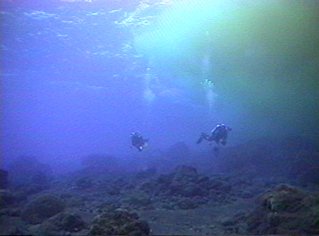
There are more than 60 wreck sites in Truk and within one week Odyssey visits the most popular. Some of the wrecks are too large to cover in just one dive so divers are offered the opportunity to do several dives in a particular area.

There are far more wrecks in Truk Lagoon than there is room here to describe and each one has unique characteristics. The unique history, diverse marine life, and concentration of wrecks will have you planning a trip back for more.


The "Newly Refurbished" Spirit of Niugini Liveaboard - A Floating Nightmare!
(and the reason I became my own group trip leader)


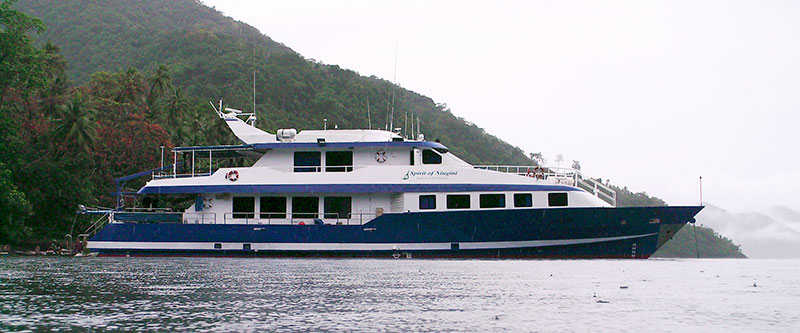
Hoping to attract discerning divers, Tawali Resort in Papua New Guinea announced in 2008 that after many months in dry dock the Spirit of Niugini was ready for charter. They claimed that the vessel underwent extensive refurbishment, including the installation of new interiors, revarnishing and a bright new paint job. They boasted a roomy dive deck, delicious dining, and tastefully furnished accommodations. The vessel was crewed by experienced local and international staff and her operations managed by people with extensive experience in cruise ship and hotel management who were themselves dedicated divers. Tawali Resort and this boat were partially owned by Bob Hollis, who was one of the founders of Oceanic, a manufacturer of dive gear. The local manager was Rob Vanderloos, who I understood did a wonderful job at Tawali Resort. He was also in the area to assist with the first charter after dry dock.

I had been to Tawali once before and I was impressed that anyone could build such a beautiful resort in such a remote area. Between the good impression and the hype promoting this trip by the travel agent group leader, I was excited beyond words about finally diving this area of PNG. I also found a review on Scuba Board that gave the boat rave reviews (dated January 2008), but I later learned that it had to have been written by someone tied to the boat owners. The boat was in or headed to dry dock at that time and was not available for charter in this area until our trip in October 2008.

Rainy season here is in January, February, and March, with April being cyclone season (most form in the Coral Sea and head south). Yet it had rained for two months non-stop before and through our trip. Nice weather would have been great, but it would not have helped with the issues we experienced on this boat. This trip went down in history as being the worst live-aboard experience in my 30 years of diving. Not only did I go home very ill, but I took with me some of the worst dive trip stories imaginable. The notes in this report were written during the trip, so none of this was from fading memories.

The boat doesn't look bad from the outside, but there was nothing good about this boat.
Day 1 - Nail-biting Bus Transfer to Tawali Resort

The Tawali minibus was waiting for our arrival at the Gurney Airport in Alotoa. They loaded us up and warned us to make pit stop before we left the area. There would be no bathroom breaks until we got to the boat, which was about 30 miles away. The road was rough a couple of years ago when I visited and the trip took us 90 minutes one way, but this trip was much worse. The bus was air conditioned and the condensation from the AC was dripping on the seats in the back of the bus. It started as a drip, but ended up filling a small cooler by the time we got to the boat, even after soaking our luggage. There was enough water to ruin a suitcase full of cameras or a laptop!

There had been a lot of rain and what was described in the promotions as "rainforest with trickling streams" were now mud slides and floods. Many parts of the road were washed out. At one point we had to wait for the road crew to fill the washed out road with gravel so we could pass. The trip took us over two and a half hours to get to the dock where we were picked up by a Tawali dive boat to be taken around the point to board the Spirit of Niugini at the Tawali Resort dock. 

Arrival at the Spirit of Niugini

When we finally arrived at the boat, the crew unloaded our luggage, assigned our rooms and moved us onboard.

The boat had been in dry dock for the past six-nine months and this was the first charter since. The captain and crew were also new to the ship. We were expecting some shake down on this trip, but were ill-equipped for what we were about to experience in the next eight days. I had later discovered that the group leader already knew that the boat wasn't ready for charter, even after our departure, but never told any of the passengers.

The boat layout was somewhat unusual compared to other boats I've been on (18 of them in my diving career). The main deck lounge and eating area were one in the same. Here we would eat all meals at the four dining tables. The very small galley was on the other side of a partial wall just next to where we ate. When meals were being prepared the grease fumes and anything burnt filled the lounge. Yummy!

The accommodations were located on both the front of the main deck and on the lower deck in the front and back with the engine room in the center. The staterooms on the main deck were not bad, with bright windows (pictured in their marketing), but the lower deck rooms were dark, damp, and dirty (not pictured in their marketing). The toilet in my room looked like it hadn't been cleaned...ever. The tiles were cracked and the shower curtains were moldy and falling apart.

The dive deck was located behind the main lounge area. The dive deck didn't give us much space to move around. It might have been better for 10 divers instead of 18. From the dive deck steps lead to the upper deck and a shaded seating area. The camera tables were also inconveniently located here. We had to walk up and down slippery, wet steps every time we got into and out of the water. The rocking of the boat on the second deck threw several of the housings off the table onto the floor. This happened several times during the trip while the boat was moving. The enclosed camera room included camera charging stations. This room had lots of shelves with both 110 and 220 power. This was a comfortable lounging area because it was warmer than the other heavily air-conditioned parts of the boat. Inside the storage areas where we kept our expensive camera gear we found rodent droppings and cockroaches. The entire boat was dirty and insect infested.

There was a sitting area in the front of the boat, but since we only saw sunshine on the first day of the trip, we didn't get to use it.

Day 2 – Finally get in the water                        

Tawali Resort Jetty

10d  15.997’S 150d  46.611’E

The next morning Greg, our host, gave us a dive briefing for the check-out dive. Since two passengers had some of their bags left in POM by Air Niugini, the boat did not leave that night and we did our first dives right under the boat. I had heard good reports about reef in front of Tawali Resort, so I was glad we got a chance to dive it. The reef here is a sloped wall with large bommies full of undercuts where fish and critters hang out. We found lots of oysters, upside-down jellyfish, nudibranchs, tunicates, elephant ear coral. Some small fish, anthias, large puffer, bumphead wrass. Lots of trash down the wall too (beer bottles, new hat, coffee cup, pieces of tarp) and small rocks tied up with some kind of leaf, probably used by the locals for fishing. Water temp was 82 degrees and vis was about 50'.

Wahoo Point

10d  15.187’S            150d  47.032’E

A small point located on the North side of the mainland with a shelf from 15' to 50' in depth and dropping with a sheer wall down to 200+'. The site also hosts a variety of anemonies, a school of barracuda and very large elephant ear sponges and cabbage patch coral. The wall was steep with huge corals, crinoids, and schools of anthias darting in and out of the coral. We encountered several species of angelfish, sweetlips, and found lots of nudibranchs. Several divers saw a small whaleshark at the end of the dive. Wish I had been set up for wide angle.

Cobb’s Cliff

10d  12.664’S            150d  53.669’E

The third dive was out further past the end of the peninsula at a spot they called Cobb’s Cliff, but I was still too exhausted from the travel, so I skipped it to prepare for my evening presentation about photo composition. Dinner was steaks and fish, vegetables and scalloped potatoes. Dessert was strawberry shortcake.

Day 2 - Normandy Island

The good: At 5:15 the next morning the boat left the dock and headed for Normandy Island about two hours from Tawali Resort. The waters were smooth at first and the ride was very comfortable half way out, then it got windy and rough. Many of the crew were getting sea sick and items in the lounge were not tied down, so stuff was flying everywhere. We learned that some of them had been recruited from the local village and had never been on a boat before! Passengers were feeling it too, but all was fine once we arrived. It was at that time we were told that there would be no NITROX for the trip, due to a problem with the compressor. This was later resolved.

Our first dive would be at the Calypso Reef area named "Womps" or "Barbarian", depending who you ask. All these dive sites already had names, but when the resort owners moved into the area they took it upon themselves to name the dive sites after their friends and family. 

The dive site consisted of a couple of pinnacles in the middle of nowhere. They could not be seen from the surface. The early morning and dark skies influenced me to put on my 60mm macro lens, but as soon as we hit the water we could see why we roughed the trip to get there. The bommies were covered with large sea fans, some easily 15’ across and most of them multiple layers deep. There were large schools of fish of all sizes. The green cup coral branches were full of golden anthias and fusiliers. Lots of blue and red cod (bass?) and several lionfish. With the macro lens I felt like I was dragging around a boat anchor the entire dive! I'm much more of a wide angle shooter than I am macro, but I had no idea I would be staring into the face of hundreds of missed photo opportunities when I jumped into the water.

After a surface interval I jumped back in with my 10-17 fisheye lens. It was me and Mother Nature for the first 15 minutes of the dive and I was in heaven. Large schools of jacks and snappers "whooshed" around me, sounding like a strong wind in the woods, as they evaded capture by the tuna and other bigger fish feeding on them.

After lunch we went to "Observation Point", which is off the tip of Normandy Island for some muck diving. We were diving under where the boat had anchored. The sandy bottom sloped off to over 100 feet. There were all kinds of weird critters crawling around in the sand and debris. We found several good sized nudibranchs, lots of small shrimp dancing around the anemones, a strange yellow on yellow clownfish, golden ghostpipefish, red devil fish, both yellow and brown seahorses, peacock flounders, sea pens, bright red snake eel, blue spotted rays, hermit decorator crabs, cuttlefish, baby octopus, and some cup corals on the rocks near the grassy shore. We were lucky to do two dives here. The last dive was bordering between dusk and night and it was totally dark by the end of the dive, since we were down there for almost 90 minutes.

The bad: When we got back to the boat Greg warned us that there were some BIG box jellyfish that were gathering around the lights on the other side of the boat and suggested we get some shots. I saw in National Geographic showing the effect of tentacle contact to human skin, as well as possible death, so I declined his offer.

We got back just in time for dinner. At dinner one of the passengers commented that a local attempted to spear her from his canoe at the surface. She was at 70’ and videotaped a spear fall to the sandy bottom too close for comfort. Assuming he was aiming at her and not the fish her video lights were attracting, she came to the surface, foregoing the mandatory safety stop required by her computer. Unfortunately that locked her out for 24 hours.

The ugly: With so many things breaking on the boat, inexperienced crew, and constant rain the mood of the trip was headed south fast. Greg, who was the ship's host was already drinking beer and talking about his resignation. Our drunken group leader was acting like a 16-year-old cheerleader, because she was hooking up with one of the other passengers onboard.


Day 3

The ugly: This being the first trip after a long dry dock, we expected a few hick-ups, but the crew, who as also brand new to the boat have been doing the best job they could. We could also see that the crew was having a difficult time getting things to work properly on the boat. The clothes dryer didn't work, so we had no dry deck towels after the dives. The towels they had been using for several days now were very ripe! The crew had the dryer up on the second deck and were attempting to fix it with a big hammer, but it was obvious they have no clue what was wrong and wouldn't have the right parts anyway. The crew decided to put the stinky towels in the engine room to dry, so from here on out instead of warm, fluffy deck towels we had stinky taco shells. The towels got worse as the week progressed, to the point of being absolutely disgusting!

On any liveaboard trip there is always an interesting mix of individual personalities. When I board the boat I can’t help but begin to size up the people in the group to determine who will be “the one” on this trip. One person almost always emerges as the high maintenance diver, the chronic complainer, the loudmouth redneck – you know what I mean. Sometimes it is obvious from day one. Other times it takes a few days for someone’s personality to get the best of them. Have you ever wondered...if by the third day nobody on the trip takes the title of being "the one" do you ever wonder it perhaps it is you? 

The good: Double Towers

09d  37.420’S 150d  56.868’E

This is an area in the middle of nowhere where huge coral foothills scatter the sandy bottom. The crew had a hell-of-a-time dropping anchor on the dive spot. It took them over an hour after the call to go diving, but when they finally did, the dive was worth the effort. Unfortunately much of the reef had been ripped up by the multiple attempts to anchor and it landed right in the middle of what had been huge sea fans. I couldn't help but take pics of what this incompetence had done to the reef.

There was soft coral as far as the eye could see and large sea fans covered with crinoids. As we descended down there was a lot of current, but the area between the two main bommies was calm. We found huge branches of soft coral and massive sea fans. Lots of batfish, puffers, anthias. The DM found an ornate ghostpipefish on a huge seafan.

The bad: When we got to the surface most of us on a euphoric high, we discovered that some of the other divers were complaining that the dive was too difficult for them because there was too much current and angrily decided to skip diving for the rest of the day and start drinking. Bad decision! The second dive was at the same site, but the current had died down significantly. Soft corals were still open and the dive was gorgeous.

During the next surface interval, we caught wind that one passenger had gone off on Greg, because locals had stepped up on the back swim platform of the boat and she felt it was a security risk. Another passenger fanned the fire even more by showing her video of a the local fisherman's spear underwater, which she believed had targeted her. Some of the passengers were freaking out unnecessarily. Other passengers were getting very tired of all the negativity. While some of the passengers felt that they were in grave danger by being on this trip. The rest of us went diving! 

It's important that people understand what they are getting themselves into when traveling to third-world countries. There is a lot of crime in PNG. In Port Morrisby a tourist would not dare wander past the confines of their hotel walls, but the remote islands can also give shelter to those with bad intentions. The locals from the village who had come to the boat that morning came there to warn us that there were "bad people" up the river. Possibly a band of criminals who had run from Port Morrisby, who might have been a risk if they knew we were there. Those local people who came to our boat were actually there to help us. These remote villages have no income except for the few tourist who come there by boat. 

Since our last dive was out in open ocean, the captain moved the boat to Esa-ala Jetty for dinner and our last dive. During the crossing things got pretty rough my housing took a dive off the camera table. Camera too. After careful inspection and water check all seemed to be OK in spite of this. Now would be a terrible time to start having camera problems. The camera tables are on the second deck just behind the camera room, so motion is a bit more amplified on that level. I should have known better, but this was a stupid design and bad setup. I got lucky this time.

The boat anchored at Esa-ala Jetty and some of the passengers did a fourth dive while others stayed on board for a presentation about RAW file processing, images size, resolution, JPG vs RAW.


The good: Day 4 - Balaban’s Bommie

09d  44.529’S 150d  43.157’E

The skies look a little cloudy, but it’s not raining and the water is very calm. It looks like things have calmed down with the passengers who were having issues, so hopefully everyone can move on and enjoy this amazing place.

The next dive site was a reef called Balaban's Bommie, which is another mound of coral at the edge of a wall drop off. The wall part of the site was absolutely amazing with many deep cuts into the reef that created large, vertical rooms that went from over 100’ to the surface. Not as much soft coral or as many seafans as the other sites, but the typography alone was amazing enough to make this wall one of the best I’ve seen anywhere. At 80 feet we saw two very small white tip sharks. Andrea videotaped another kind of shark the books said was an Miline Bay Epaulette shark. Toward the top of the reef were huge table corals, staghorn coral, and the fish that find protection there as far as the eye could see.

The other side of the mound was a shallow sloping reef, also with lots of caves where we could cut in and find a gazillion fish, strange sponges, scallop oysters and huge barrel sponges. Around the other corner we found lots of staghorn coral, lettuce leaf coral, anemones with clownfish.

After the third dive we moved the boat back to the mainland to anchor for the night at Dyna’s Beach, said to be one of several places where muck diving was originated. When we jumped into the water we swam for 10 minutes before we started to find interesting stuff, but later found out we went in the opposite direction of what the dive briefing told us to do. Still we found a well-camouflaged crocodile fish, a cuttle fish that followed up around for a while, lots of small shrimp, sea cucumbers with multiple shrimp, an orange mantis shrimp, and another Epaulette carpet shark. When we came back to the boat we found out that there were four or five box jellyfish in the water around the boat.

The bad: When we went back into the dungeon to my room I noticed that the carpeting in the hallway was soaking wet. This also went into the rooms next to the engine room, which puddles forming! The AC compressor had a busted line and all the water from the air conditioner was being dumped here! The crew attempted to clean it up, but the stink remained for the entire trip.


Day 5 - Still raining

First dive of the day was on a deep wall just around the corner from the muck dive we did last night. It was a bit dark from all the rain, but still a very cool dive site. Lots of swim-throughs and caverns with multiple entries and exits. We found some very pretty anemones and a large toadfish just hanging out on a coral ridge on the wall.

The second dive was at the other side of the boat in the mucky slope. The first thing we found just under the boat was a pretty little yellow seahorse. Down the reef we found a couple of coral patches mixed about the sand that were loaded with lionfish, eels, juvenile fish, and other critters. We did a 90 minute dive here.

For the next dive Greg moved the boat to another reef called Banana Bommie. It's still raining, so things are kind of dark. Donna and I did a photo shoot that ended up in a big goof-off. We did find a big cuttlefish and the biggest blue ray with yellow spots that I have ever seen.

We had the option to do the night dive, but nobody wanted to do it. I think we’re all cold and sick of the rain.


Day 6 - Wednesday - Crinoid (Black & Silver)  (2)

10d  16.170’S 150d  58.520’E

Looking out the porthole of my cabin I can see that it is still raining. This is supposed to be the dry season here in PNG, but we have yet to see one day without at least 16 hours of rain and gray skies.

This morning we headed out to another reef they called Black & Silver. This area was large enough to swim around in a dive. The wall side was a slope covered with seafans and soft corals. Around the point where the current picked up the slope off to the deep was scattered with seafans and coral. Jack found a huge lionfish that was out over the reef and didn’t mind being bombarded by cameras and flash. On the sandy area between the reefs we came across a silvertip shark sleeping on the bottom. At the safety stop Jack found a solar powered nudibranch. We did a dusk dive here too. Vis was bad at the last 15 feet and the current had picked up, so the lines at the back of the boat were used to bring in all the divers who got caught up in the strong currents. 

The land-based managers of the boat (Rob Vanderloos sp?) FINALLY gave up on the crew's attempt to fix the clothes dryer with a hammer and brought a working replacement out to the boat. At the same time Greg found a stash of fresh towels that had been stashed away in an area he didn't know about. Only 6 days too late.

Site 2??: Linda’s Reef  (2) 10d  15.966’S 150d  58.587’E

Captain Bill moved the boat back to a calm bay at Nuakata Island for the night.


The good: Day 7 – Thursday - Banana Bommie

Last day of diving and it is still raining. Greg took us back to Banana Bommie. The vis was down and the skies were dark, so I set up my camera for 60mm macro shooting. The last dives there were OK, but this time we went around the bommie counter-clockwise and found a much nicer area. There was a mound of coral at about 80’ that was loaded with large sea fans, green cup corals, leather corals, soft corals, and lots of life. I was having some problems with my strobes and TTL converter, so I switched to totally manual settings and got things straightened out. On the way back up the reef to go back to the boat we came across four cuttlefish what swam in formation for all the photographers. Higher up at the surface we found a small group of squid. Lots of pretty nudibranchs here too.

For the next dive we moved to another reef they called Sarah’s Reef. This looked much like the last dive site, so I went with the 60mm macro once again. Here the dive guides found pygmie seahorses on the seafan at about 80’. 

Several of the divers found a shark’s egg casing with a fetus shark inside. So we went back for several last dives here. The guides thought it was probably a Milne Bay Epaulette shark. Also found some nice nudis on the spines of a sea cucumber.


Day 8 – Friday

Things are winding down and we’re all trying to dry dive gear and pack up. After lunch we get off the boat at Alotau and head to the airport. We were all surprised to find that we could pick up a wireless signal from somewhere on shore, so we had a chance to touch base with the real world for a short time. After much more rain and waiting around, we were finally on the plane back to Port Morrisby where we would spend the next night before we flew out the next day.

We were a bit ahead of schedule on our return due to last minute flight changes by Air Niugini. Our original return was supposed to be the next day but the only airline in PNG can pretty much do whatever they want, regardless of the consequences for their customers. All things considered, this trip was much less of a travel nightmare than I’ve experienced in the past. We didn’t get dinged for overweight baggage or heavy carry-ons like last time. This was thanks to our group leader, who handled this as a group check-in. In spite of a few hick-ups, everything went very smoothly.

The crew included:

Greg – Cruise director
Bill – Captain
Johnny – electrician
Eli – welder
Elija – engineer
Kiddy – dive crew
Nelson – second engineer
Manny – dive crew 
Precilla – hostess
Harriet – hostess
Benson – chef
Junior – divemaster


{artsexylightbox path="images/pngdiving" thumbnailPath="images/pngdiving/thumbs"}{/artsexylightbox}

We Named it Morgan's Island

August 1998 - The Kingdom of Tonga


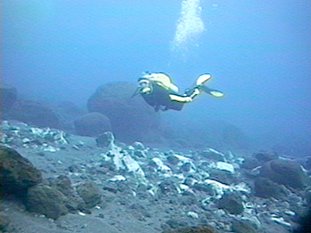
As NAI'A approached the new island we concluded that we were likely the first people to see it, and without a doubt, the first to dive it. The sulfur crusted rocky mass had disappeared and reappeared over the last several years. We named it Morgan's Island, after a beautiful baby girl onboard.

The air was as thick with the smell of sulfur, as it was with anticipation. The dive briefing was short, since nobody onboard had ever dived on an active volcanic island before. None of us had any idea what we would see down there. Fish with three eyes? Sharks the size of whales? Watch the currents — don't put your hands into anything hot and bubbling — probably a good idea to stay out of the yellow cloud. Let's go diving!

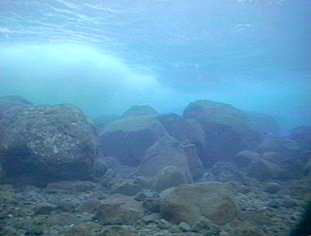
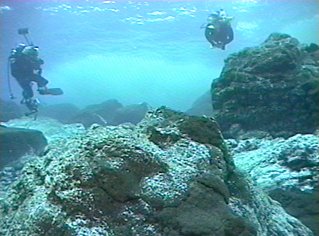
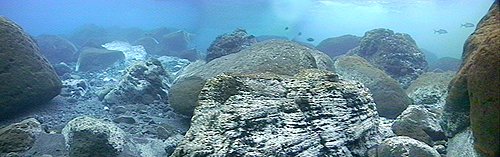
Cat and I were the first to get into the water. The bottom where the boat was anchored was like a black sand beach. There was not much evidence of life other than algae growth on the small rough rocks. As we swam toward the island the bottom became rocky with a combination of big solid boulders mixed with porous volcanic rocks found in every color. Many were very obviously once molten. We steered clear of "the cloud" as Rob suggested and hovered right next to it, awestruck by its size. To all our amazement a large turtle swam from the middle of the cloud directly over and around us. Thinking "if it didn't kill him" we became more courageous and swam closer and closer to the yellow wall. We saw even more life inside the cloud. Fish of several species, even several small shark had made their home in what seemed to be a hostile environment.

Inside the cloud were small steaming vents and even more life. Only several of the divers ventured into this mysterious mist, somewhat concerned what it would do to our cameras, dive gear and skin.

From this island we moved to find fresher air and a nice spot to settle for the night only to wake up to tomorrows next new adventure. I hope someday Morgan will have the opportunity to come back to see the island named after here...if its still there.


Photos taken from video grabs and text from travel notes by Bonnie Pelnar

TRIP REPORT: The Socorro Islands (Revillagigedos Archipelago) Aboard Solmar V

January 2008

ABOUT THE PHOTOS IN THIS REPORT
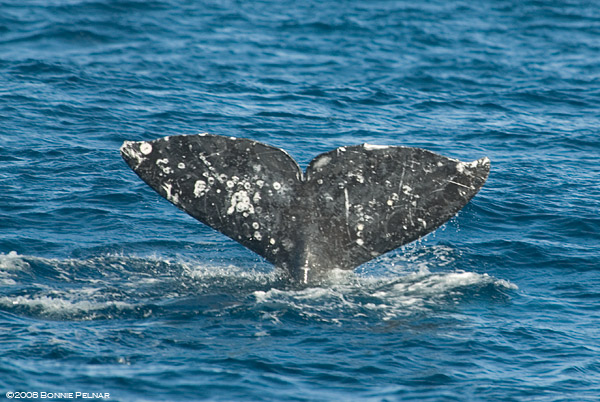
I shot most these photos with a Nikon D200 in a Sea & Sea housing with dual Inon strobes. Most the underwater photos were taken with a 10.5 fisheye lens. Some were with a 12-24. Whale tail shot was with a Nikon 110-400 VR zoom lens.

I thought I'd try something different so I converted several of the underwater photos to black & white. This allowed me to adjust some images that might be too blue to color correct and get the depth and detail that is very difficult to capture in such an amazing environment.

ABOUT THE SOLMAR V

Solmar V is a 112' live-aboard based in Cabo San Lucas, Mexico. My first trip aboard this boat was in January 2004 and I've done five more trips since, and I have another photo workshop trip coming up in April. The boat was previously owned by a Mexican corporation (same one that owns Solmar Hotels, Suites, and the Solmar fishing fleet), but has been bought by Jose Luis & Leslie Lee Sanchez about two years ago. They are very familiar with this vessel since they were the booking agents for her prior to the purchase.

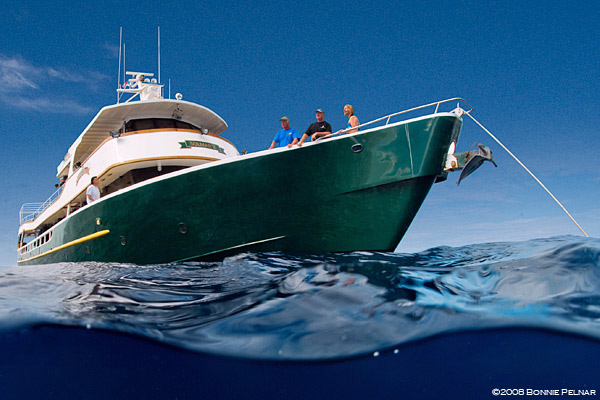
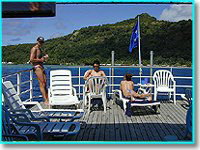
Solmar V is long and narrow, which suits the type of seas typical in the Socorro area. She's a beautiful boat with a dark green hull and yellow and white accents. The main salon area is rich with polished brass, mahogany, granite countertops, and etched glass accents throughout. Certainly one of the prettiest boats I've ever been on. There are booth-style tables in the front and the back of the salon, all large enough to seat 4-5 people and smaller tables in the middle for those guests who choose to dine by them self.

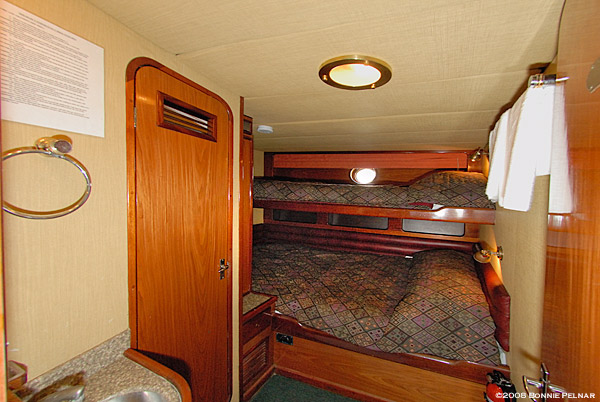
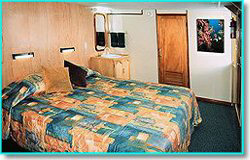
There are 12 private cabins. Six larger double cabins in the middle of the boat, three double cabins toward the bow, two single cabins just behind the bow, and one double cabin right in the bow of the boat. Each cabin has its own head and shower, and each has its own AC control (on or off, but no in between). The cabins are small, but they have a lot of storage areas so once you're moved in they are quite comfortable. Each cabin also has its own TV and DVD player. I noticed some nice improvements to the cabins on this trip. All the carpeting has been replaced, much of the hardware (door handles & latches, light fixtures, towel racks, etc) was new. The mattresses and linens are all new and are very comfortable.

I also noticed that they have resolved a vibration problem that they used to have while the boat was underway. Some people didn't notice it, but it caused the silverware to jiggle across the dinner tables. So no more spoon races for us crazy kids. The boat was so smooth at times I had to look outside to see if we were actually moving.

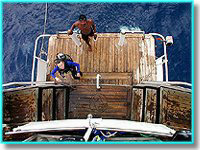
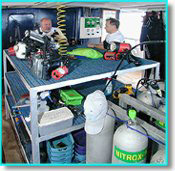
The dive deck is large with about 22 dive stations, each with its own basket for storing fins, masks, etc. In the center of the dive deck is a large two-level camera table. There are charging stations both outside and inside. I signed up for NITROX when I signed in, so my tank was filled after every dive and I analyzed it myself. Diving was easy from both the pangas and the back of the boat. Nobody had to carry their tanks around for the panga dives. The crew did everything. Diving from the back of the boat was also very easy. Solmar V has a large dive platform and two large ladders which made it easy to get in and out even if there was a swell.

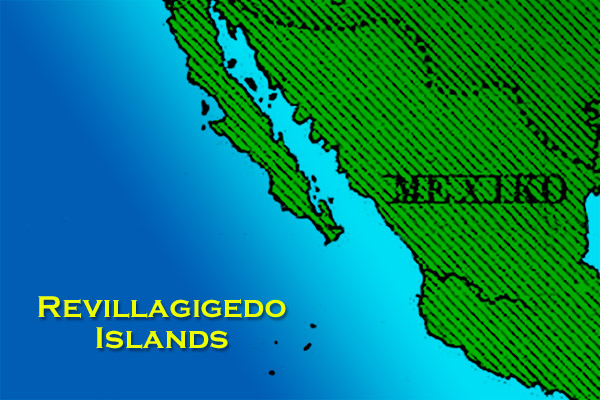
The Solmar V does trips to the Sea of Cortez, Guadalupe Island and to the Revillagigedo Islands, which are more commonly called "Socorro" after Socorro Island. Makes a lot of sense to me, since most people cannot pronounce "Revillagigedo" much less remember it. These islands are located 240 miles south of Cabo San Lucas and between 448 and 603 miles west of mainland Mexico. Solmar V has been coming here for 15 years and they have made more than 300 trips to this area. Captain Gerrardo and the crew are extremely competent, professional and are always happy to help out the passengers with whatever they might need.

ARRIVING IN CABO SAN LUCAS

To get to the Solmar V you need to fly into San Jose del Cabo, which is about a 30 minute ride from Cabo San Lucas. There are many direct flights from hub cities in the US. From LAX the trip is just two hours, hardly enough time for a Mimosa & a snack. The airport is constantly growing to accommodate the booming tourist area around it and there always seems to be construction going on. After clearing customs* and immigration we breezed by the timeshare salesmen to catch our awaiting ride with Cape Travel.

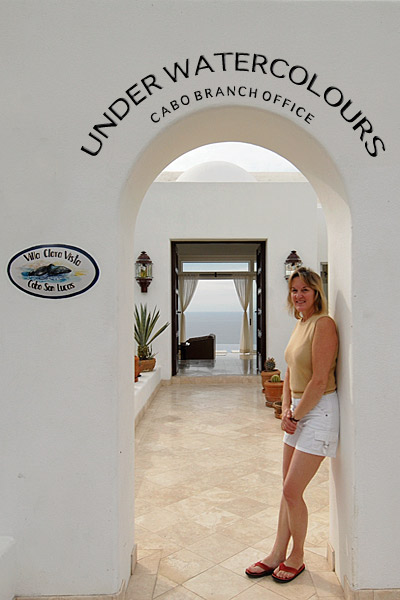
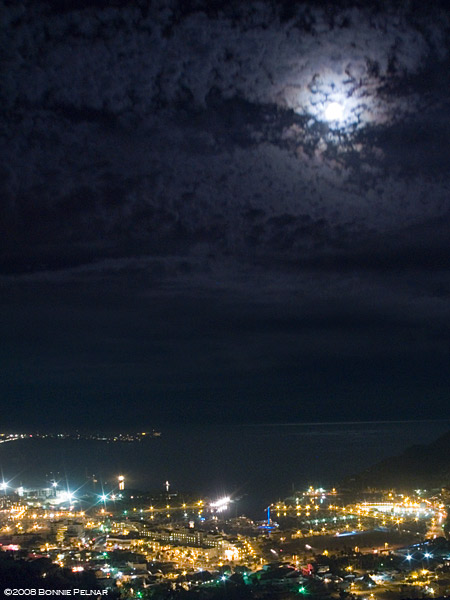
Although I could have flown in the same day the boat left, I came in a day early on the invite of some friends who had a beautiful house in Pedregal. So I declared it my official Cabo branch office. We had a wonderful dinner at El Correl, then drove up to the top of Pedregal to take some night pictures of Cabo bay. Very pretty!! The next morning we had a few hours to tour around downtown and do a little shopping for all those prescriptions that cost us ten times more in the US. Good thing we don't need a prescription for Tequila.

BOARDING THE SOLMAR V

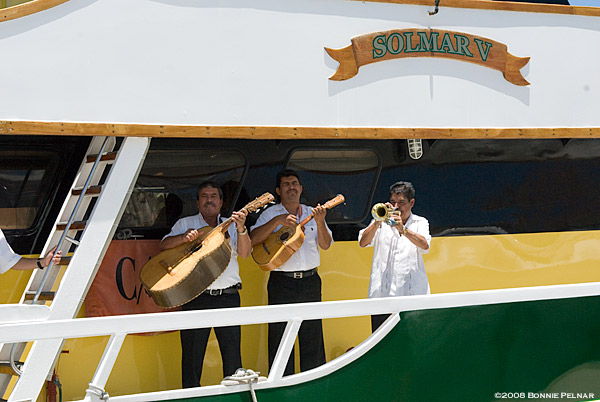
Solmar V is located in the center of the Cabo Marina. I've done that march down I-dock many times before, but never get tired of seeing how the boat glows sitting among all the shiny white charter fishing boats. The mariachi band was playing and we all gathered around the snack table of munchies. The crew had already brought our luggage on board, so all I needed to do was unpack my dive gear, take care of the paperwork, and I'm ready for the infamous Solmar V Margaritas.

The boat left the dock at around 4:00 p.m. cruising past Cabo's famous Lover's Beach and Los Arcos with a brief stop so we could all take pictures of the arch, piles of sealions, pelicans, and long shots of the beautiful homes up in Pedregal. From here on out, the crossing would take about 22 hours.

The boat has a large collection of movies on DVD that we could watch while underway. There's also a computer workstation available for customers to use if they decided not to bring their own. You can set up a SeaWave satellite phone and email account which allows you to send and receive emails several times a day and/or make phone calls. I personally like being away from this but there were many other passengers that used it to keep in touch with the real world.

The crossing was smooth and time seemed to fly by as we got aquatinted with the other passengers, put our cameras together and set up our dive gear. During this time the crew gave us a detailed boat and safety briefing and a thorough dive briefing. When we arrived, the crew immediately went to work to anchor the boat and unload the pangas. We were all ready to jump into the water for our checkout dive.

SAN BENEDICTO ISLAND - EL FONDEADERO

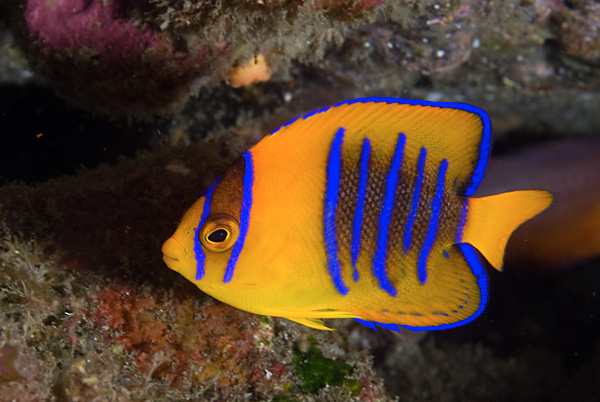
El Fondeadero is typically the first place we dive when visiting these islands. Its generally pretty calm and not too deep so its where the crew brings us for our checkout dive. Here we always see the beautiful juvenile Clarion Angelfish. There are three large pinnacles full of lobster, fish, eels and occasionally shark. At 74 degrees, the water felt a little colder than I expected but my new Harvey's 5 ml wetsuit was perfect. Visibility was the best I've ever seen here and I was hoping this was a taste of things to come.

SAN BENEDICTO ISLAND - THE BOILER

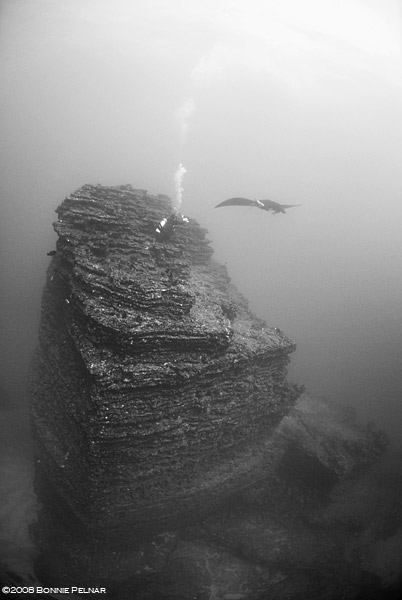
Early the next morning Solmar V moved to the other side of the island to a spot called "The Boiler". A large pinnacle rises to about 20 feet from the surface, so you can't see it from topside. The surf and swell running across the top sometimes making the water look like its boiling. The pinnacle is small enough to swim around during one dive and its very majestic looking from all angles. The bottom is at around 160' so getting your weights right and not being too heavy is very important. This area is a popular cleaning station for the giant Pacific manta. They gather here to be cleaned by the Clarion Angelfish. The visibility here has been great every time I've been here, but today I could all the way to the bottom.

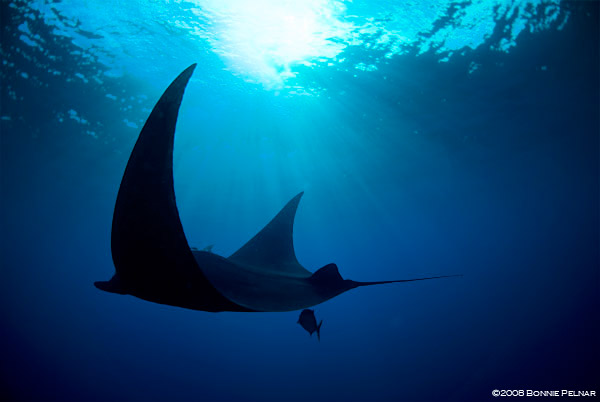
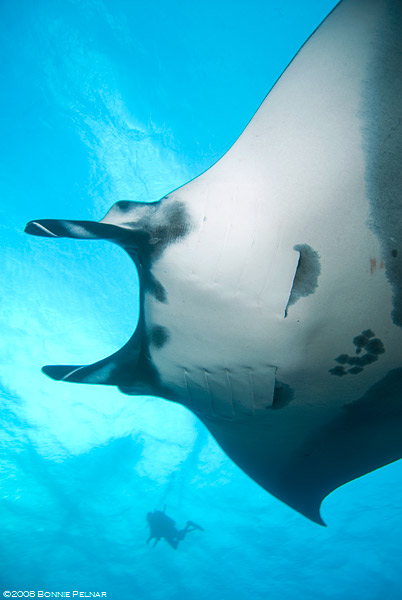
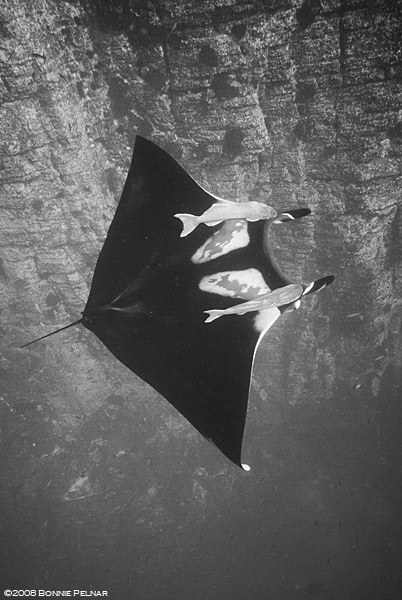
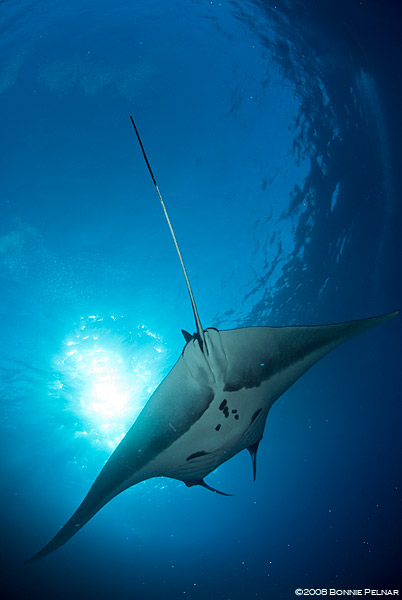
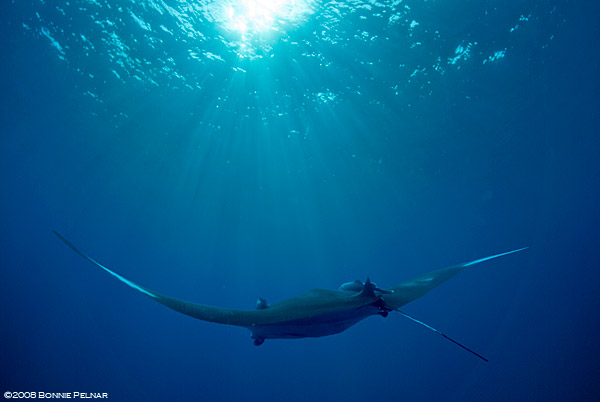
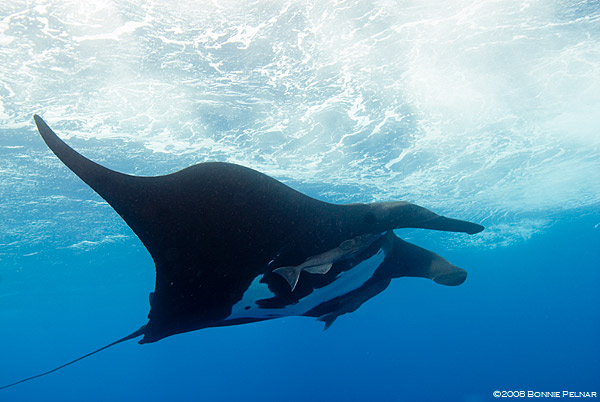
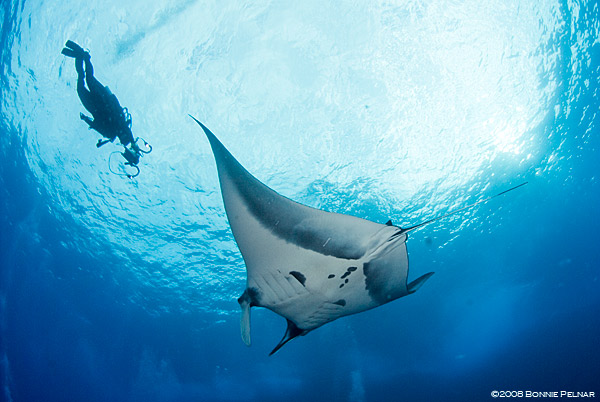
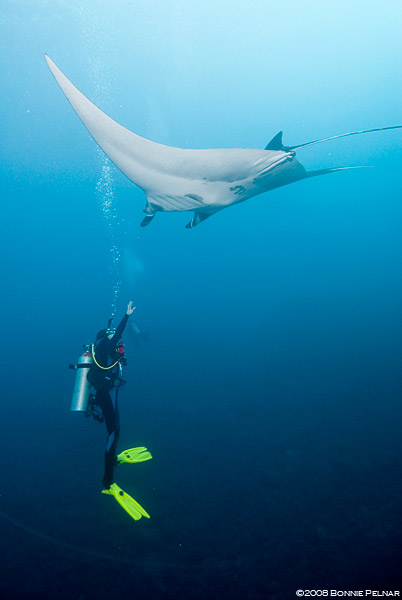
It was just a matter of a few minutes in the water before the mantas started to show up. We had several at once on most dives and they swam from diver to diver to check us all out. I recognized some of the mantas from previous trips. Researchers have commented that the mantas do remember people they like. As they approach, they look you right in the eye, and you DO feel like you are communicating with them. So I did everything I could to "call" them to swim to me. Yea, I know that's all in my head, but I did get close enough to kiss them a couple of times. Through all the dives we could hear the whale songs that rattled our eardrums the closer we got. On a past trip in March, Rey, two other divers, and I were fortunate enough to see a humpback whale underwater here, and shortly after, a Tiger shark. This is also the place that my friends had three humpbacks stay with them for several days. I was really hoping we would see the whale underwater, but enjoyed the music nonetheless.

Between dives most us the guest would gather on the large sundeck. Half the deck is shaded and half is in the sun, so it was a great place for sunbathing or taking a quick nap. On days where manta activity is really high the chef will serve a buffet lunch instead of sit-down so that the divers can eat during the surface interval and get back in the water to spend more time with the mantas.

ROCA PARTIDA

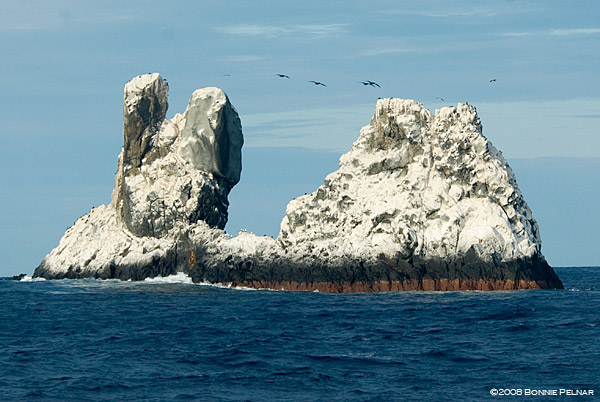
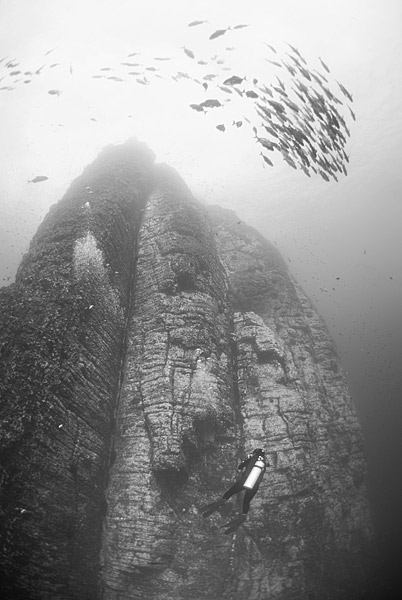
The weather forecast was good so the Captain Gerrardo and crew decided to head out to Roca Partida for the next day of diving. Roca is a guano covered pinnacle about 85 miles from San Benedicto Island. About 100' high and as long as a football field, the pinnacle is in the middle of nowhere and is a magnet to pelagics. This is where I've seen many sharks, mantas, huge schools of fish, and whalesharks on past trips, but this is Mother Nature and I knew there were no guarantees. Another sunny day and calm conditions had me worried that things might be too calm for any good pelagic activity, but as soon as we got into the water we saw mantas, sharks and large schools of skip jack and yellowtail.

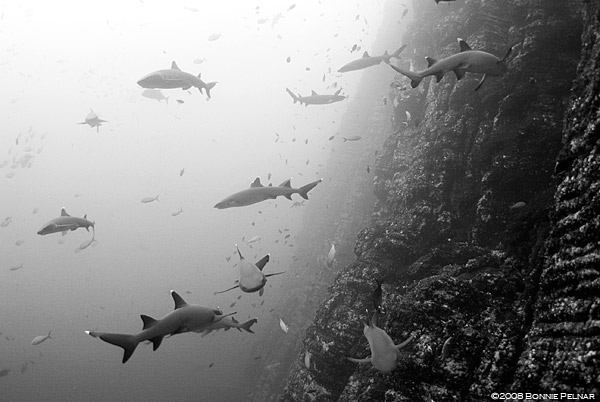
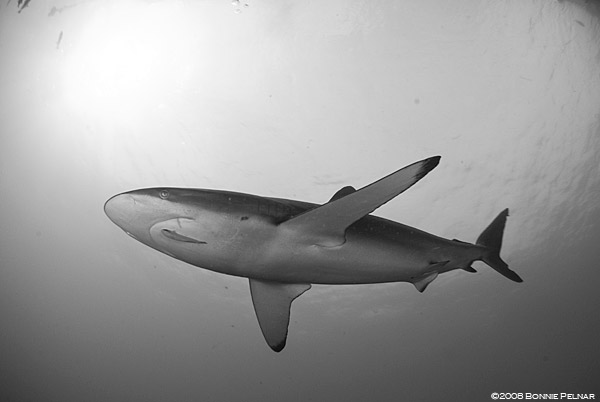
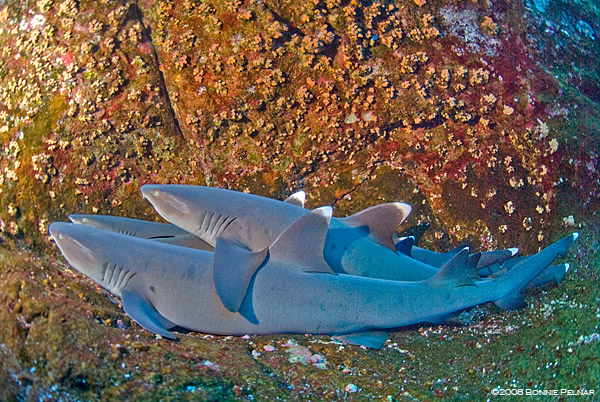
We didn't have much current except around the corners, but it was nothing we couldn't handle. This seemed to attract all kinds of life. Just off the rock we saw a school of Silvertip sharks, something I hadn't seen here before. The pinnacle goes straight down to the bottom at about 200+ feet, so all the dives here are like a bottomless wall dive. At 60' there are several caves where we found sleeping whitetip sharks every time.


During a dive we could swim all the way around the rock unless we got distracted by mantas or sharks, which was most the time. We had mantas on every dive and because the visibility was so good we had some amazing photo opps. I have shot thousands of mantas, but never get sick of the last 20 minutes of the dive when the mantas cruise around the divers at the surface. We had beautiful sun rays on every dive and lots of manta that were happy to swim right through them for me. The conditions here were fantastic, so we decided to stay for two days of diving.

SOCORRO ISLAND - CABO PEARCE

When we arrived at Socorro Island early in the morning we headed straight to the Navy Station to clear customs. While we sat around in our pajamas drinking coffee, the military officials came aboard the boat to confirm the passenger log and do a possible boat inspection. The passengers were briefed ahead of time on what to expect and they always make it sound like its going to take longer than it ever does. This time it took about 20 minutes and we were off to our next dive site.

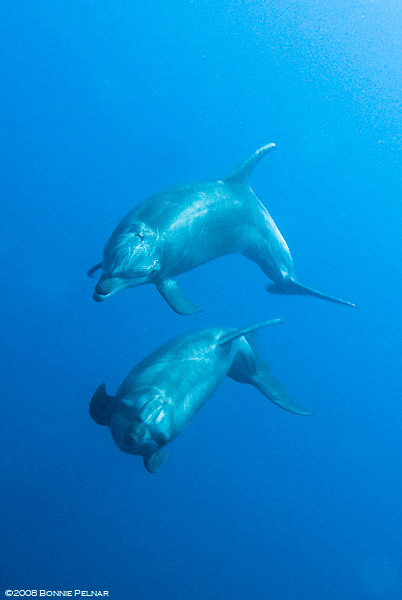
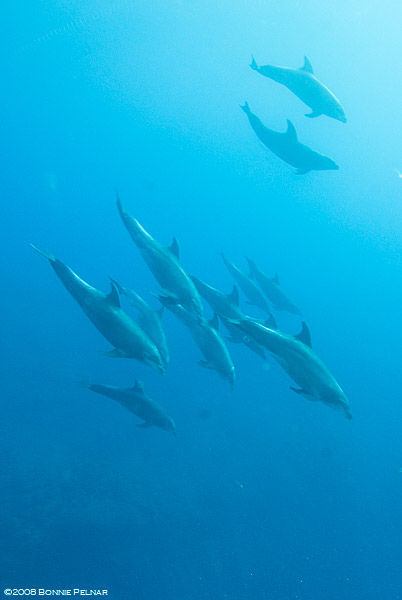
The dive site Cabo Pearce is located on the east side of Socorro Island. We had another sunny morning. Solmar V anchored in a calm cove surrounded by rocky red cliffs. The island was particularly pretty today since the grassy areas were green with vegetation. Normally the island looks dry and brown. The pangas took us off to a long finger of rock that stuck out into the ocean. We were surrounded by dolphins all the way. When we rolled back into the water we were immediately greeted by 20-30 friendly dolphins. I've seen dolphins here every time I've been here, but never this many before. They stayed with us through the entire dive.

Photographing dolphins is difficult even with a very fast housed SLR camera. They move very fast so most of my shots were captured as I was panning in an attempt to keep up with them. After a few shots I figured out that I could set up the shot by timing their anticipated behavior. Toward the end of the dive we were closer to the surface, so we had more light. By then I had already taken so many pictures of them I decided to play instead. So I started to imitate them with a dolphin fin kick, rolling and spinning like they did. I had a blast with four or five dolphins who seemed like they were having just as much fun. I noticed white, slimey stuff floating around me in the water. I stopped to examine this strange juuz, rubbing it between my fingers. I could see that Rey was laughing at me underwater, trying to give me the "hand signal" for what it was, but I just didn't get it. It wasn't until I got to the surface what it was. I had been spawned!

During our surface interval the pangera took us for a ride to the nearby caves. A humpback whale surfaced about 50' from the Solmar V and hung around for a while. We hoped to see it on the next dive, but the whale had already left. Instead we had several very friendly mantas that kept us entertained through the whole dive.

THE AQUARIUM

The afternoon dives were done on the other side of the island at a spot called "The Aquarium". Since this dive has better macro subjects, than big animals I decided to sit this one out and take some pictures of the boat and the divers instead. We could see whales just offshore the entire time we were there and we enjoyed a beautiful sunset.

SAN BENEDICTO ISLAND - THE CANYON

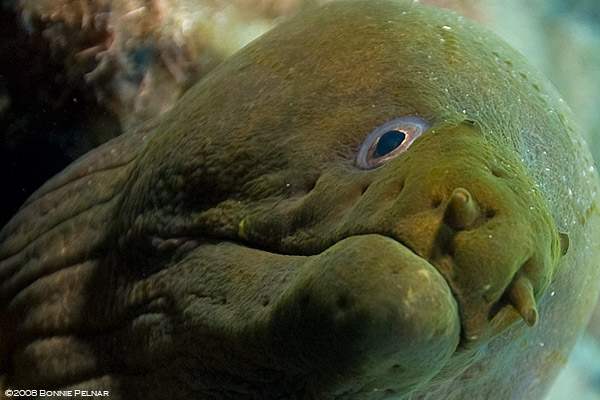
This was our final day of diving. It was windy on the other side of the island and the crew had decided conditions might be rough at "The Boiler" so we dived at "El Canyon". It was here that I had seen many mantas, dolphins, Galapagos sharks, silky sharks, and schools of hammerheads off the point. This was our last day of diving, so I cashed in on all four dives, each time seeing several mantas and lots of fish on the reef. A large green free-swimming eel kept us all amused as he posed for the photographers and videographers, sometimes swimming right between the legs of unsuspecting photographers. We could hear the whale song underwater and Rey took a group of us off to the blue to check it out. Once again, no whales underwater, just a lot of music.

DINING

All divers know that the next best activity to diving is eating. The food onboard seems to get better every time I take another trip. The day starts with hot coffee and tea first thing in the morning. Pastries, cereal and fruit are brought out next, and hot breakfast that starts at 7:00 a.m. Typically the first dive briefing of the day is at 7:45 a.m. There are always plenty of snacks around between dives.

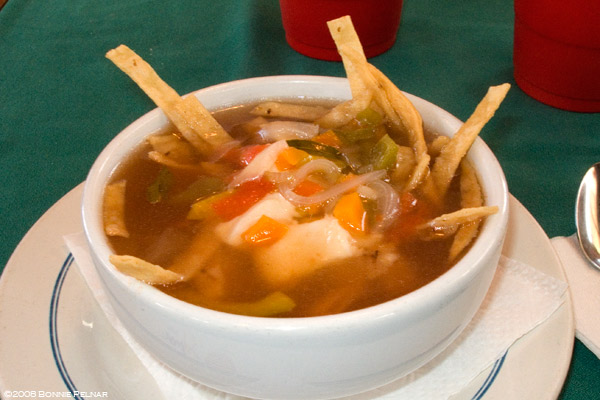
Lunch always started with hot soup and bread, then a full hot meal, complete with dessert. I was pleased to see that the chef was now making tortilla soup, something I asked for on the comment form from a previous trip. We also had a few Mexican meals (which were fantastic). After the afternoon dives we had more snacks. Our group seemed to especially like the Margarita sunsets each evening before dinner.

Dinners were also three courses complete with salad, bread, an entree, dessert and Chilean wine. All the meals were very good. I found the portions to be way too big for me so I asked for half portions, which was just right. Most the desserts were from Costco and although they were good, I would have liked something fresh baked on occasion. I would have liked to have more chocolate onboard too, but that's a totally different addiction that I've learned to deal with. Luis the steward already knew not to give me the bottle of chocolate sauce on ice cream night.

After dinner some of us would stay up and watch movies but most evenings few passengers made it much past 9:00 p.m.

THE CROSSING BACK HOME

Solmar V headed back to Cabo after our last dive at San Benedicto Island. The crossing back was a bit rougher than coming down, but still not too bad. Just outside of Cabo the Captain informed us that we had whales very close to the boat. He circled around for about an hour while three humpbacks surfaced, spyhopped and showed us their tails. I'm sure the Captain and crew were anxious to get home, but they were very kind in giving us all the time we needed to get some great shots.

 
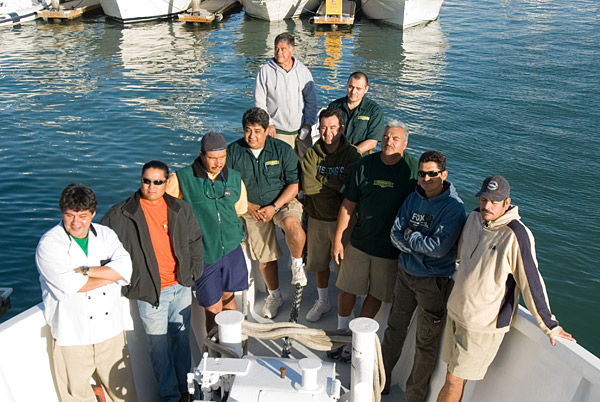
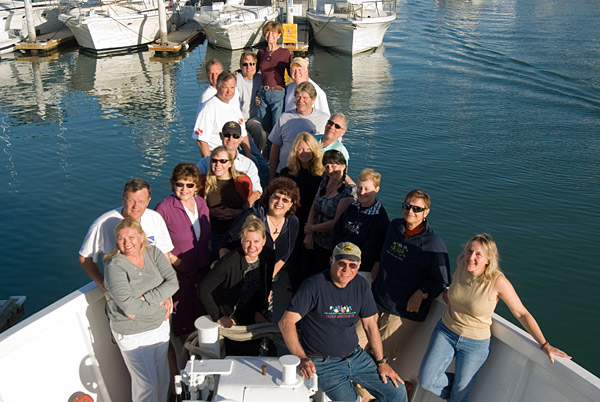
The fantastic crew: Pedro, Roberto, Rey, Aurelio, Geronimo, Captain Gerrardo, Luis, Luis, Eric, Chaka.   The fantastic passengers (in no particular order): Dr. Claire, Dr. Steve, Marj, Kelly, John, Jeff, Tom, Bob, John, Patti, Jay, Dale, David, Andrea, Tippie, Carolynn, Carol, Cindy, Lois, Bonnie.

THE GRAND FINALE

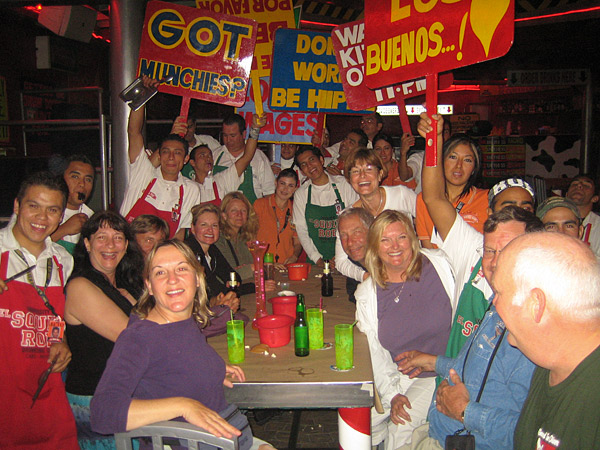
Old habits die hard and I just couldn't stay away from El Squid Roe, one of the local hot spots. By the end of this trip I had made lots of new friends and it was pretty easy to talk them into coming along. After waaaay too many Margaritas, dancing on the tables, and pole dancing in the cage, we all went back to the boat (I think) for our last night on board. The next morning we disembarked and headed to the Solmar Hotel or into town to do some last minute shopping.

If you would like to see more photos from this trip you can view our YouTube.com slideshow.

There are also other video clips there that will give you an idea of what the diving is like at Socorro.

Diving with Mantas at Socorro Island from Solmar V

Diving with Hammerheads & Mantas at Socorro Aboard Solmar V

Dreaming of MANTAS & SHARKS at Socorro Islands on Solmar V

If you have any questions about this report or would like more info about the boat or the diving, please feel free to contact me.


WE HAVE SOME GREAT TRIPS COMING UP. JOIN US!